Introduction
A pooja room is often one of the most meaningful spaces in a home. Whether it is a compact prayer corner or a dedicated room, its entrance helps establish the atmosphere before someone steps inside. A thoughtfully designed pooja room door can provide privacy, frame the space, and connect the prayer area with the wider interior. The most successful designs balance cultural preferences, craftsmanship, practical use, and the architecture of the home.
Choose a Door Style That Complements the Interior
Begin by considering the overall style of the home. In a traditional interior, a wooden door with carved borders or symmetrical motifs can complement timber furniture, patterned flooring, and warm finishes. In a modern home, a simpler panel design with clean lines may create a calmer appearance. A transitional design can combine a restrained door profile with a few traditional details, allowing the prayer space to feel connected to both old and new elements.
The door should not compete with every other feature in the room. If the surrounding interior already includes ornate flooring, decorative lighting, or detailed wall panels, a quieter door may create better visual balance. Conversely, a plain interior can accommodate a more expressive entrance.
Explore Decorative Details Thoughtfully
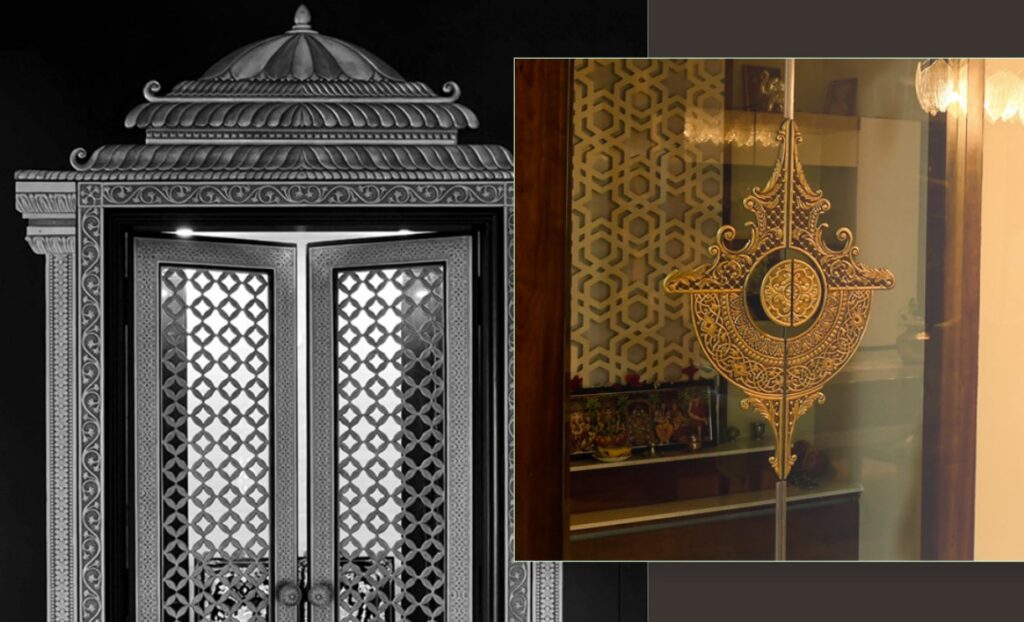
Decorative details can give a pooja room door its identity. Carved floral patterns, geometric borders, traditional symbols, and lattice-inspired panels are common design directions. Metal accents can add contrast and definition when used with care. Brass-toned fittings, for example, may work well with warm wood finishes, while darker or brushed-metal details can suit a restrained contemporary palette.
Scale matters. A large motif may look impressive on a wide double door but feel crowded on a narrow opening. Before finalising a pattern, consider the door dimensions, viewing distance, and the amount of detail already present in the room. Decorative elements should be securely fitted, easy to clean, and suitable for everyday use.
Select Materials and Finishes for Practicality
Material selection affects appearance, maintenance, and long-term performance. Wood is valued for its warmth and versatility, while other suitable materials may meet different budgets and design requirements. The right choice depends on construction, local conditions, usage, and advice from a qualified installer. In areas exposed to humidity, material preparation, sealing, and ventilation deserve particular attention.
Finishes should complement nearby surfaces rather than match them exactly. A natural wood tone can create warmth; a painted finish can make the entrance feel lighter; and a darker stain can establish a focal point. Ask the supplier about cleaning instructions and how the finish may age over time, especially where the door is handled frequently.
Balance Privacy, Light, and Ventilation
A pooja room may need a sense of separation from busy household areas. Solid panels provide privacy and create a clear visual boundary. Lattice sections or carefully positioned openings may allow some airflow and filtered light, depending on the room layout. If glass is used, consider privacy, glare, safety, and whether the appearance suits the household’s preferences.
Think about how the door functions throughout the day. A door that opens into a narrow passage may obstruct movement, while a sliding option may help where swing space is limited. The best arrangement depends on the available space and the needs of everyone using it.
Coordinate the Door with the Pooja Room
Treat the door as one part of a complete interior composition. Coordinate its finish with the pooja unit, shelves, wall colour, flooring, and lighting. Warm finishes can work with soft, warm lighting, while a simpler design may pair well with neutral walls and minimal accessories. Avoid adding too many competing materials or metallic tones in a small room.
Lighting can highlight carving and surface texture, but it should be positioned to avoid harsh glare and uncomfortable shadows. Plan electrical fittings and decorative elements together so the finished space feels intentional rather than assembled in separate stages.
Consider Dimensions, Safety, and Accessibility
A beautiful door must also be comfortable to operate. Check the clear opening, handle height, hinge quality, door weight, and direction of movement. The frame and wall should be appropriate for the chosen door, and installation should be handled by a competent professional. Ensure that decorative projections do not create sharp edges or snag clothing, and select hardware that can be gripped comfortably.
For homes with children, older adults, or people with limited mobility, ease of opening and a clear approach may be especially important. Resolve these practical details before choosing the final pattern or finish.
Plan Maintenance from the Beginning
Maintenance needs vary by material and finish. Use the cleaning products recommended by the manufacturer, avoid abrasive methods on delicate surfaces, and periodically check handles, hinges, and decorative fittings. Dust can collect in carved details and latticework, so choose a design that can be cleaned without difficulty. Prompt attention to loose hardware or finish damage can help preserve both appearance and function.
Before ordering, request material samples or finish references where possible. Review the design in the actual lighting of the home, confirm dimensions, and clarify what is included in the supply and installation. These steps help reduce surprises and make it easier to compare options fairly.
Conclusion
A well-considered pooja room door can combine meaningful decorative details with practical materials, comfortable operation, suitable privacy, and a finish that belongs naturally in the home. By planning the door alongside the surrounding architecture, homeowners can create a prayer space that feels personal, balanced, and enduring.
For further inspiration, explore Lakshna’s Pooja Doors by Artisticks: https://www.artisticks.co.in/brands/lakshnas-pooja-doors/.
About Artisticks
Artisticks focuses on decorative metal art and architectural details for interior and exterior spaces, including pooja doors and other customised design elements.